
Briny Breezes Seawall Funding Raises Questions About Reserves, Oversight, and Long-Term Financial Exposure
Briny Breezes, Florida — As major seawall and infrastructure discussions move forward in the coastal cooperative community of Briny Breezes, shareholders are asking fundamental questions:
Are reserves adequately funded?
What exactly is being built?
Who ultimately controls the scope and cost?
And what financial exposure could residents face?
This report reviews publicly discussed figures, statutory requirements, and structural governance issues that merit further clarification.
1. Reserve Funding and Maintenance Concerns
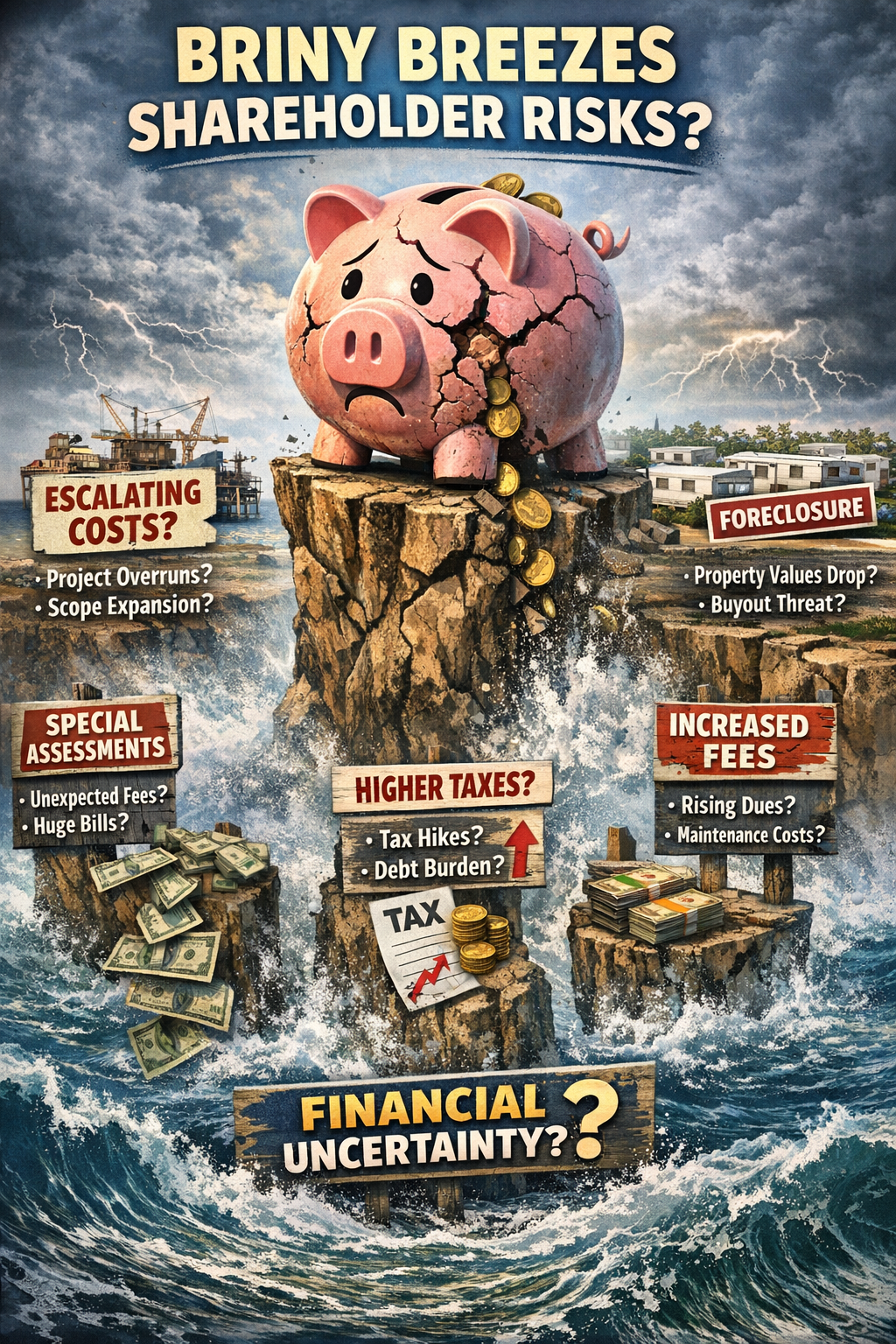
Multiple shareholders have publicly stated that cooperative reserve accounts — including those associated with seawalls — have historically been underfunded. While audited financial records would be required for a definitive determination, residents note that available reserve balances appear significantly lower than projected replacement costs for large-scale marine infrastructure.
In Florida, reserve funding is particularly sensitive following the 2021 collapse of Champlain Towers South in Surfside — an event often cited statewide as a cautionary example of deferred maintenance risks.
It is important to clarify that no evidence suggests structural conditions in Briny Breezes mirror Surfside. However, the broader lesson frequently referenced by policymakers is straightforward: underfunded reserves can delay necessary replacement projects.
2. Florida Cooperative Law on Reserves
Briny Breezes operates as a cooperative under Florida Statute 719.
Under Florida Administrative Code Rule 61B-76.005 (governing cooperative reserve funding), reserve accounts are intended to be fully funded over time for deferred maintenance and replacement items.
Legal observers note that:
Reserve items designated in governing documents must be funded according to statutory formulas.
Certain reserve mechanisms cannot be structured in a way that circumvents statutory funding requirements.
Significant reserve expenditures and special assessments generally require shareholder approval, depending on governing documents.
Whether historical funding levels complied with statutory intent would require a formal legal and accounting review.
3. Transfer of Seawall Maintenance to the Town
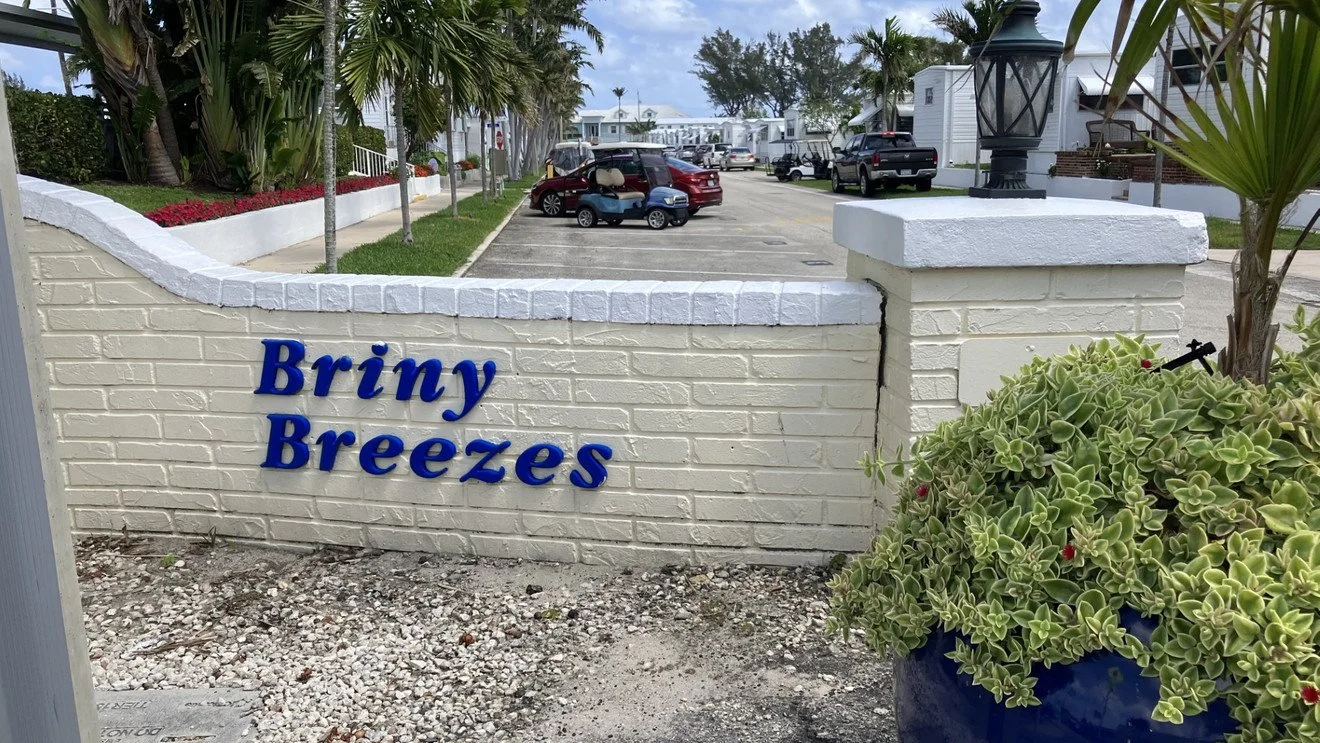
In a notable governance shift, maintenance responsibility for the seawalls was transferred from the cooperative corporation to the municipal government of Briny Breezes.
The apparent purpose: allow the Town to qualify for state and municipal grant funding programs typically unavailable to private cooperatives.
Florida resilience and infrastructure grants are generally structured for municipalities rather than private associations. The transfer therefore appears designed to open eligibility for:
State coastal resilience funding
Infrastructure improvement grants
Municipal financing mechanisms
However, shareholders are seeking clarification on the long-term implications of that transfer, including financial matching requirements and ultimate control over project scope.
4. The Funding Structure: Known Figures
Based on figures discussed in public meetings and circulated materials:
Corporation reportedly holds:
Approximately $2.7 million in reserves
A $7 million state grant (requiring matching funds)
Approximately $2.4 million in loan financing
Town reportedly holds:
Approximately $2 million (allocation details unclear)
One key issue: the $7 million grant reportedly requires a local match. That raises questions about whether:
Additional borrowing may be required
Special assessments may be considered
Future maintenance fees could increase
At this time, no finalized comprehensive financial plan has been publicly presented detailing worst-case total exposure.
5. The Brizaga Engineering Report and Scope Uncertainty
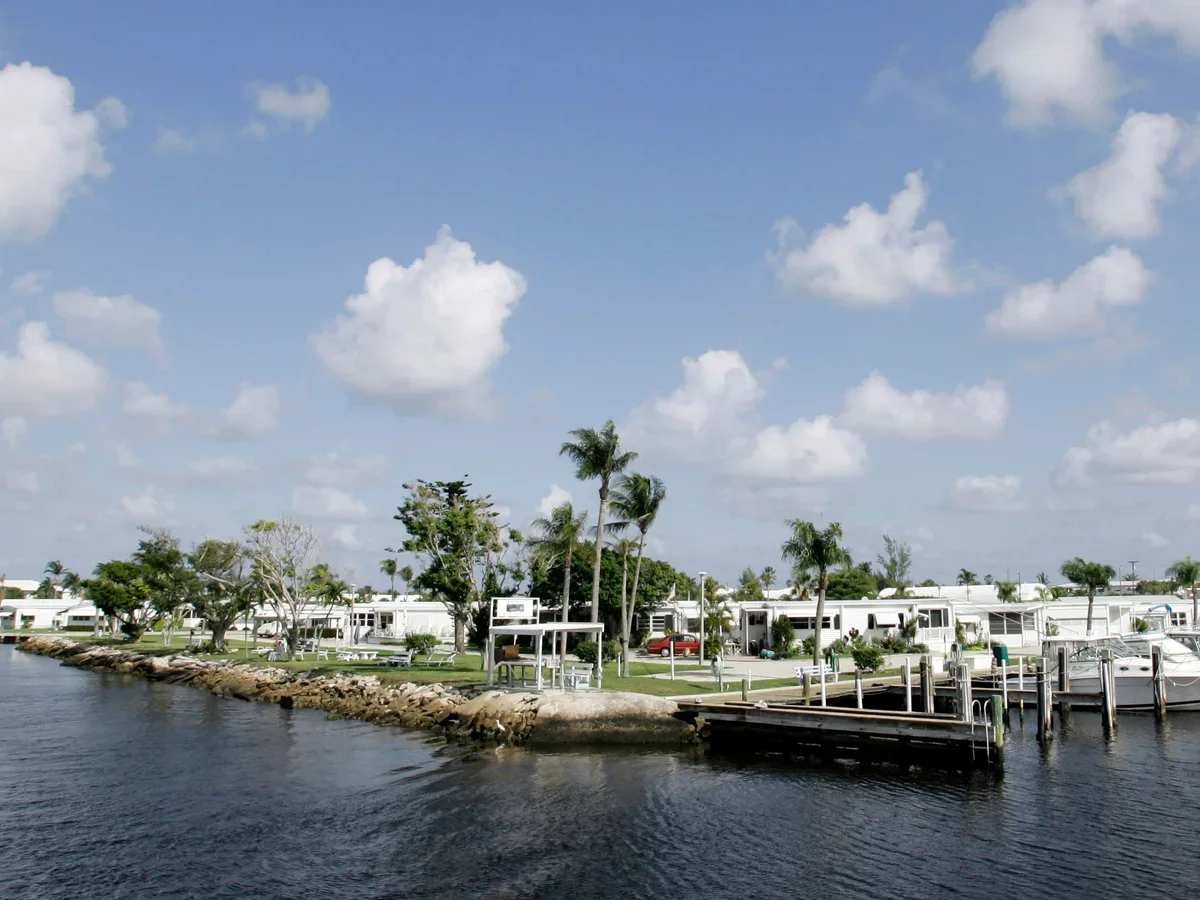
The June 2021 Brizaga engineering report reportedly outlines multiple alternatives, with projected costs ranging broadly — from several million dollars to figures exceeding $100 million depending on scope.
Potential project components discussed in various forums include:
Seawall replacement
Drainage pump installation
Possible road elevation
Utility replacement beneath roadways
Marina or dock modifications
No single definitive scope document outlining final design, full cost, contingency exposure, and taxpayer/shareholder responsibility has been formally presented in a consolidated plan.
That uncertainty has led to shareholder questions about “scope expansion” — meaning that once state-funded work begins, regulatory standards could potentially require additional improvements before final approval.
Under state-funded project requirements, projects must be completed to the state’s satisfaction. The practical implications of that oversight remain unclear without detailed intergovernmental agreements.

6. Shareholder Vote Requirements
Florida cooperative law and most governing documents typically require shareholder approval for:
Large special assessments
Material alterations
Major capital expenditures exceeding defined thresholds
Whether each phase of the current project requires separate shareholder votes may depend on:
How the project is structured
Whether expenditures are characterized as reserve replacements
How grant funds and municipal financing are classified
Shareholders are requesting clarity regarding which decisions require member approval and which fall under board or municipal authority.
7. Financial Risk Questions Being Raised
The central concerns expressed by some shareholders include:
Could taxes increase if municipal debt expands?
Could maintenance fees rise significantly?
Could special assessments become necessary?
If costs escalate, what is the maximum potential exposure per shareholder?
Could financial strain impact property values?
These are forward-looking concerns, not current determinations. No official statement has indicated that extreme outcomes are planned. However, the absence of a published total-cost cap has led to speculation.
8. Redevelopment Speculation

In coastal Florida, distressed or heavily assessed properties sometimes become targets for redevelopment offers. Some residents have speculated whether escalating infrastructure costs could make the community more vulnerable to outside acquisition proposals.
At present, there is no confirmed redevelopment agreement tied to the seawall project. Such concerns remain hypothetical but reflect broader anxieties within aging coastal communities statewide.
Conclusion: The Need for Transparency and Specificity
This report does not allege wrongdoing. It raises questions based on:
Publicly discussed funding figures
Known statutory requirements
Engineering cost ranges
Governance changes
The key issue facing Briny Breezes shareholders appears to be clarity:
What is the final scope?
What is the total projected cost range (best- and worst-case)?
What approvals are required?
Who controls scope expansion?
What is the maximum financial exposure to residents?
Coastal resilience is a legitimate and pressing concern in Florida. Infrastructure investment may be necessary. But informed consent requires full information.
As this story develops, shareholders and officials alike would benefit from a comprehensive public presentation that includes:
Final engineering scope
Detailed funding stack
Contingency projections
Tax and assessment modeling
Defined voting requirements
Transparency reduces speculation. Specificity builds trust.
